Saturday Sept 12: Montreal
VIA train from Toronto to Montreal.
Sunday Sept 13 : Iqaluit
The flight to Iqaluit from Montreal’s Metropolitan airport.
Launching the zodiacs for the short run to the Silver Wind (built in 1995).
Monday Sept 14 : Lower Savage Islands
Zodiac trip to the Lower Savage Islands and bingo - first bear sighting. She just lazed about and was totally relaxed but never really took her eyes off of us.
Tuesday Sept 15 : Lady Franklin Island
Named by James Hall in honour of Sir John Franklin’s widow, this lonely and uninhabited island lies at the entrance to Cumberland Sound.
The vertical cliffs (over 300m) are comprised of Archean rocks and some of the oldest in Canada. The frontmost is quite circular contrasting the triangular peak behind.
We named this one Catberg:
Wednesday Sept 16 : Torngats
The remote and wild landscape of Torngat Mountains national park is an Inuit homeland - they have thrived here for centuries, travelling and hunting along the shores of the Labrador Sea.
In Ekortiarsuk Fjord we got a chance to get out on kayaks to do some exploring on a moody morning.
Scott - lead kayak guide and rifle handler - here in his happy place.
One of the information sessions on board delved into the life of the polar bears, along with grizzlies and their interbreeding (they share the same # of chromosomes and can have viable offspring). A female polar bear and male grizzly make a grolar, whereas a male polar bear and female grizzly make a pizzly.
Thursday Sept 17 : Nachvak Fjord
Sunrise.
In Nachvak Fjord we got out on the zodiacs and were able to get ashore.
On land we’re surrounded by bear monitors continuously scanning around looking for anything that moves. There are 4 Inuk gun handlers with us as well, as they are authorized to carry firearms in a national park, and also share their wealth of knowledge about the land and culture.
We’ve had a bunch of polar bear sightings along the way. If there are bears on shore, we do not go and alternate plans are made. There is good viewing from the ship’s forward observation lounge - it gets crowded and fun.
Thursday Sept 17 : Ramah Bay
The ship then headed up to Ramah Bay for more shore leave - this site has remains of both Inuit as well as remains of a Moravian Mission stationed here (more about the Moravians later). It’s also the home of Eli, one of our Inuk gun handlers, who grew up here.
After such a strenuous outing, a soak in the hot tub is in order.
Time for bed.
Friday Sept 18 : Silluak
Silluak is a north oriented fjord located at the bottom of Saglek Fjord, and a spectacular place within the Torngats. Labrador black bears are here, along with occasional polar bears.
Now heading via Saglek Bay towards Hebron Fjord, watching for wildlife from the decks, and chilling with some information sessions this afternoon.
Saturday Sept 19 : Hebron
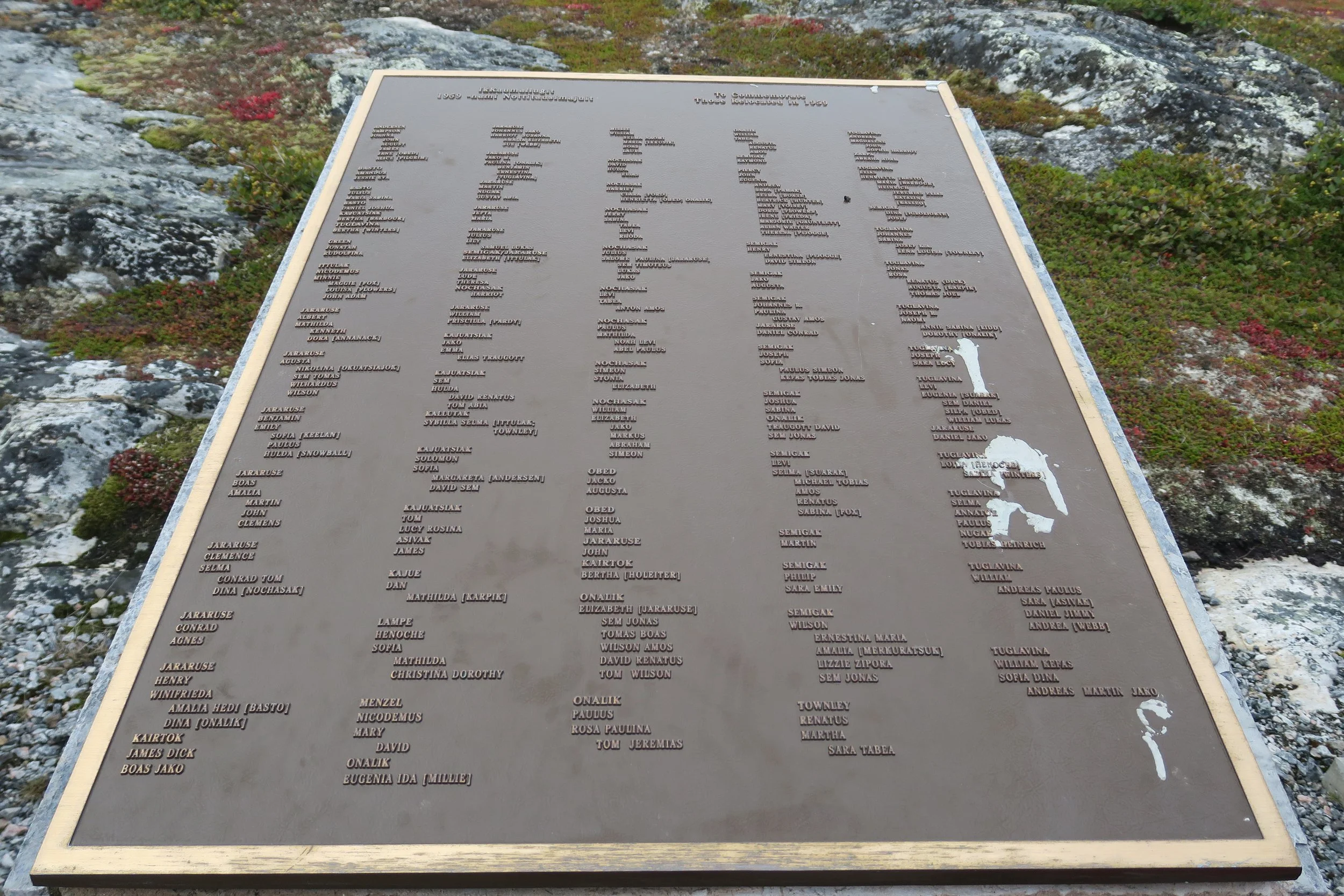
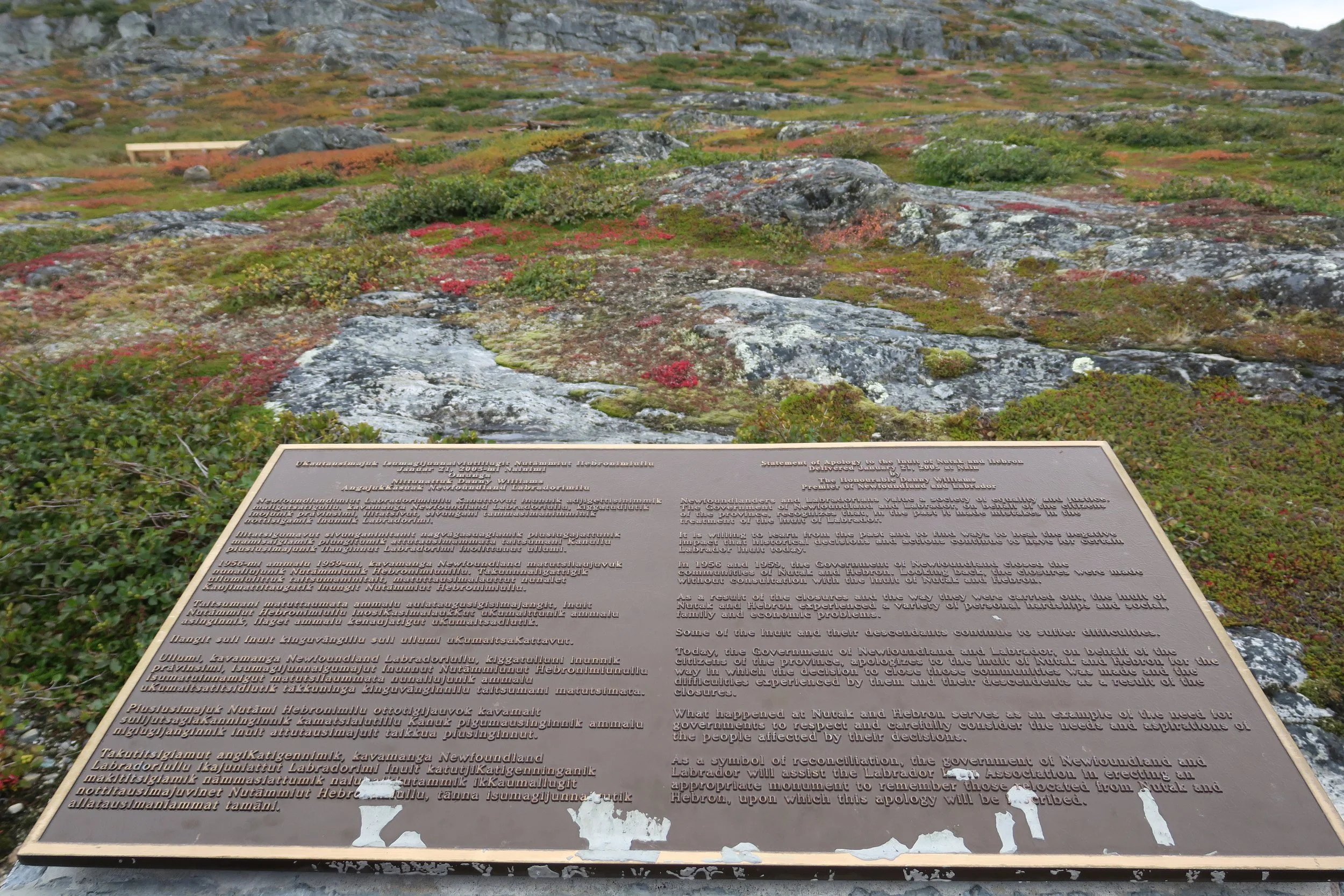
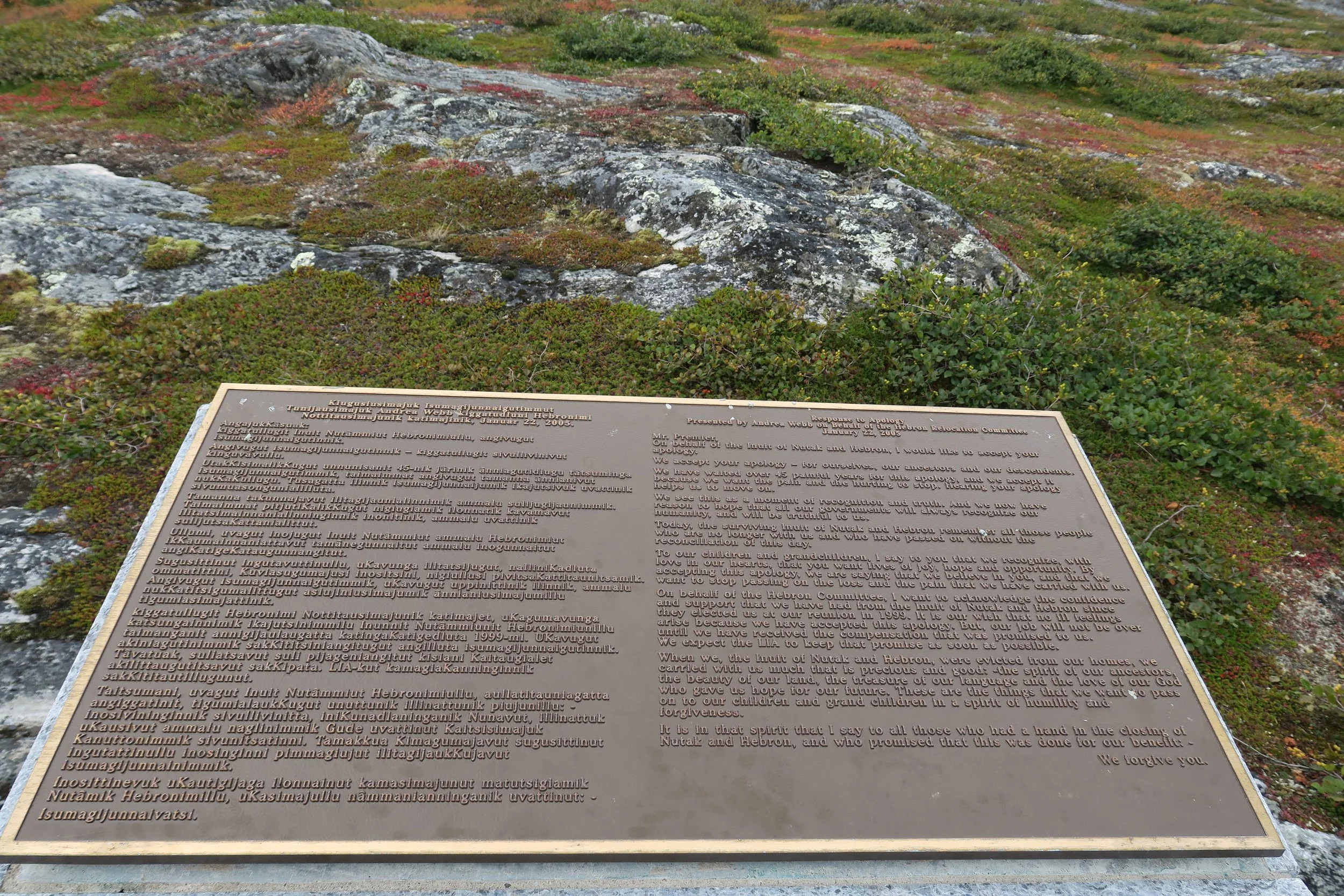
Woke up to find ourselves at the Hebron national historic site which was a Moravian mission and the northernmost settlement in Labrador - the community was closed in 1959 without consultation or any governmental support. In 1999, the first reunion of the relocatees was held in Hebron, and in 2005, Newfoundland and Labrador Premier Danny Williams apologized to Inuit affected by the relocations of Hebron and Nutak. In 2009, the provincial government unveiled a monument at the site of Hebron with an inscribed apology for the site closure to provide an opportunity for the remaining able-bodied evictees to return to their homeland together at Hebron and Nutak/Okkak Bay in the summer of 2024.
The people, the apology, the response:
Weather turned real nice - heading out to arrive in Hopedale tomorrow AM.
Sunday Sept 20 : Hopedale
We’re the first large cruise vessel to visit Hopedale (originally Agvituk, the Inuktitut word for “Place of Whales”) and we received a very warm welcome. We had locals leading small groups and we got to visit the Moravian church, museum, assembly building, Inotsiavik cultural center and also got a demonstration of some Inuit games.
A demonstration of using an ulu knife (made by his grandfather) to separate the seal blubber from the skin (which will be subsequently dried). The seal oil is then rendered and used for fuel in lamps.
The Nunatsiavut Assembly Chambers:
The Moravian church, mission center, and museum:
Nakkummek, Sophie.
Monday Sept 21 : Red Bay
Moved through a mess of humpback whales on the way to Red Bay, a national historic site and UNESCO world heritage site. The on-land and underwater archaeological site marks one of the best preserved Basque whaling stations dating back to the 16th century.
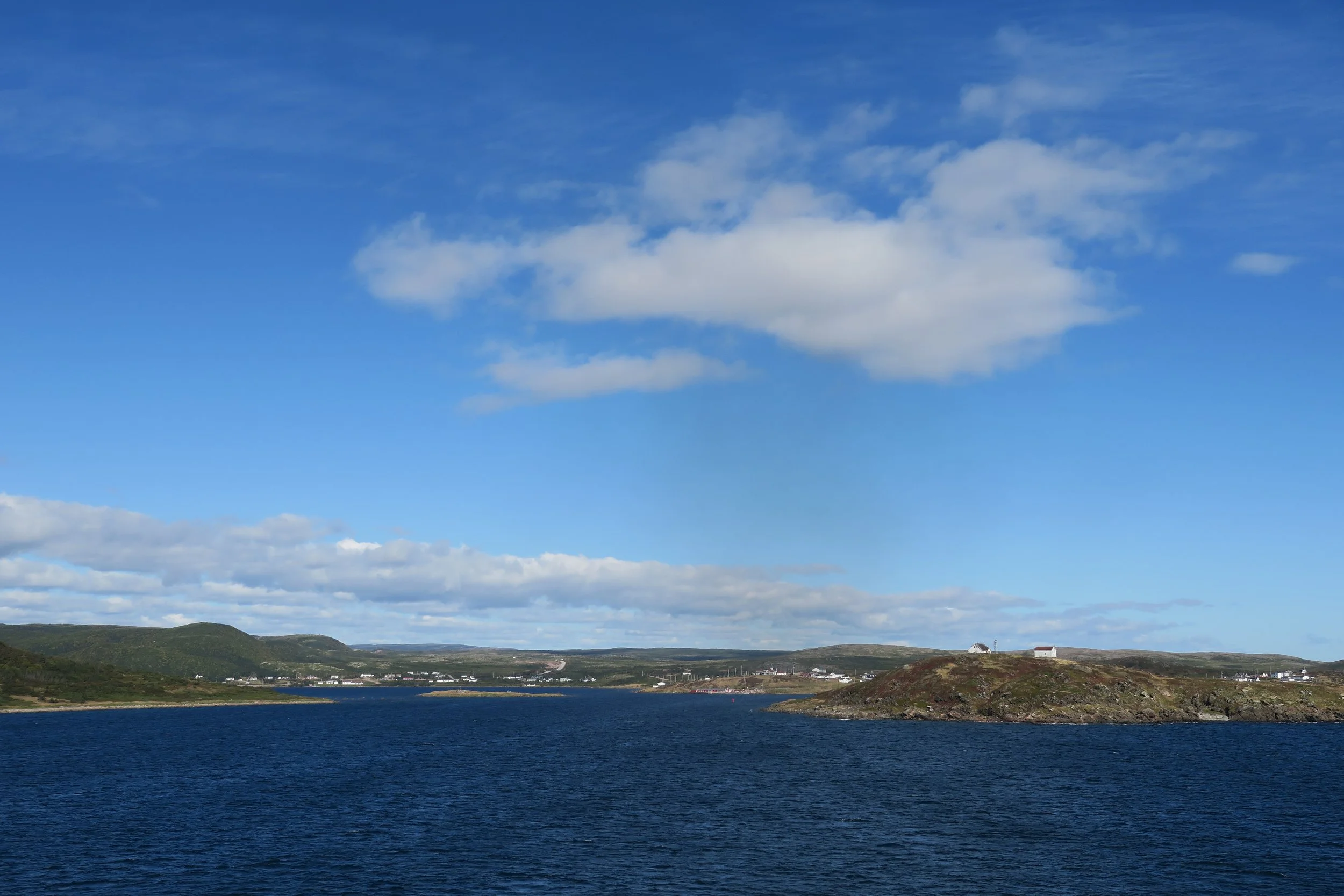
We were greeted ashore by Jimmy the Lighthouse (named for the long standing lighthouse keeper recently retired). The town pulled out all the stops and took us on walking tours, fed us moose and ptarmigan stew, iceberg beer & homemade biscuits and everyone was so welcoming. Thanks for showing us around Claudette.
It was Selma Huxley who, in the 1970s, researched the Basque presence here at Red Bay. She discovered the existence of a 16th-century Basque whaling industry in southern Labrador and adjacent Quebec, their whaling ports, archaeological remains of their bases, as well as the presence of Basque galleons sunk in those ports, among them the San Juan (1565). She was awarded the Order of Canada in 1981.